Home / Solutions / Bioenergy

Lignocellulose, broken down
to a working fuel.

Our tailored enzyme formulations break down complex plant pulps — from resistant feedstocks like bamboo to agricultural residues like rice straw — into fermentable sugars with minimal chemical pretreatment, making 2G ethanol production more viable and scalable.

The straw burning at the edge of the field is already a fuel. It is simply still locked inside the plant.

Enzymes to improve
your plant's performance.

Enabling smarter biofuel production
The opportunity Lignocellulosic biomass holds the potential to drive the future of sustainable biofuels.

Our tailored enzyme formulations break down complex plant-derived pulps — including resistant feedstocks like bamboo and agricultural residues like rice straw — into fermentable sugars with high efficiency. By maximising hydrolysis with minimal chemical pretreatment, our enzymes accelerate saccharification and reduce operational costs, making 2G ethanol production more viable and scalable.

Designed for sustainability and performance, they optimise resource utilisation — lowering water and chemical consumption while maintaining a smaller carbon footprint. Whether you aim to maximise yield, improve process efficiency, or enhance economic viability, our products are built to support your goals.
Agricultural residue

Rice straw

Paddy residue traditionally burned post-harvest, diverted instead into fermentable sugars with minimal pretreatment.

Agricultural residue

Corn stover

Resistant feedstocks broken down with high efficiency, accelerating saccharification through the hydrolysis stage.

Woody biomass

Bamboo pulp

Lignocellulosic complexes from bamboo and other woody plants, hydrolysed without inhibition from secondary metabolites.

Process fit

Drop-in for 2G

Engineered to raise plant profitability while lowering water, chemical and energy demand per litre produced.

The cellulase blend
at the core.

Formulation · Zymocel®
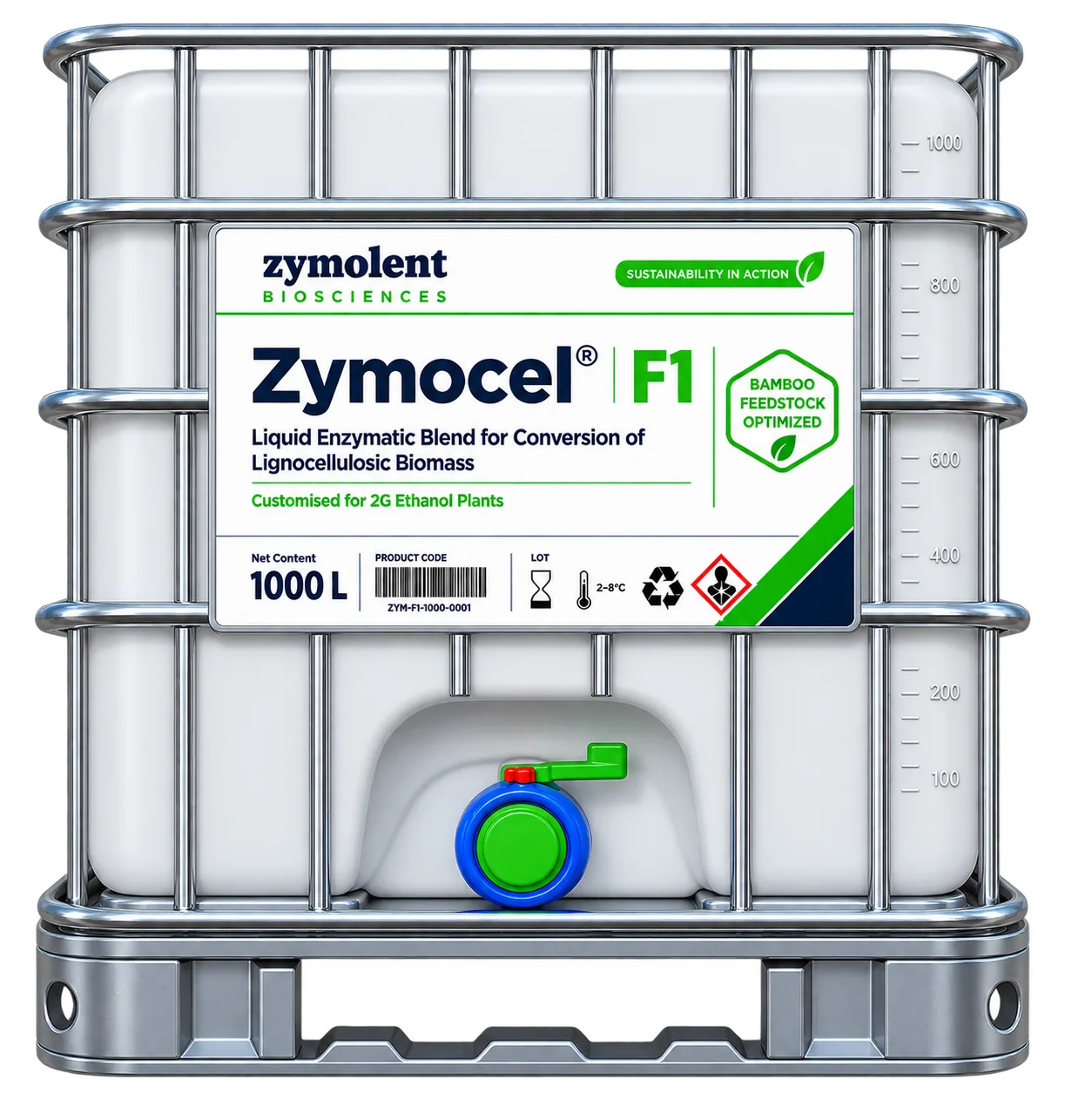
Zymocel multi-enzyme cellulase blend in a bulk IBC container

Zymocel®

An advanced multi-enzyme blend for second-generation ethanol.

Our groundbreaking cellulase technology features an advanced multi-enzyme blend engineered specifically for 2G ethanol production, achieving up to 90% glucose conversion from lignocellulosic pulp while offering enhanced shelf life and optimised performance.

Taking innovation further, we have developed a novel reusable variant that significantly reduces enzyme consumption in bioethanol production — revolutionising process economics while maintaining peak performance.

Talk to an expert

Flexible and
future-proof operations.

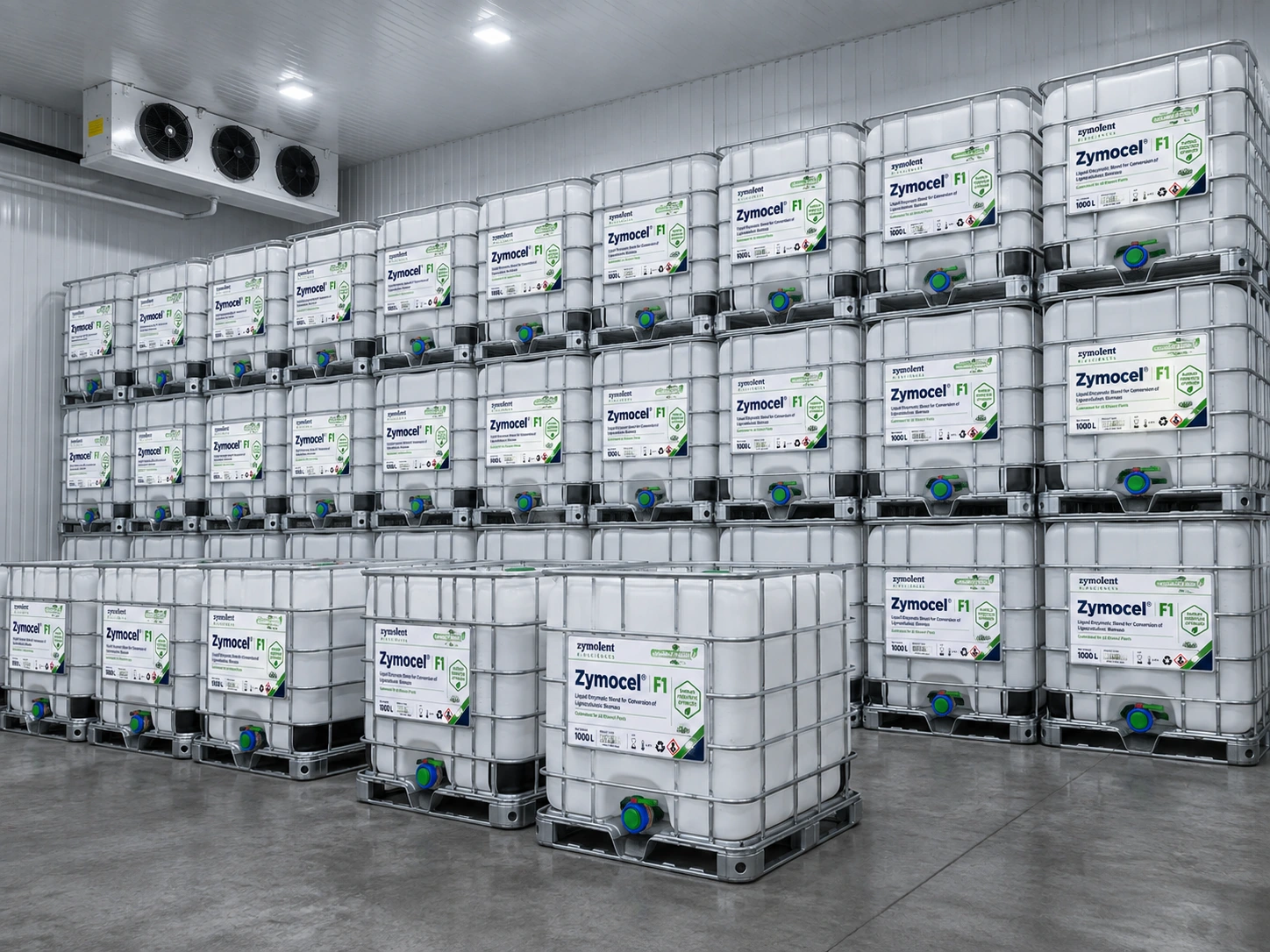
Stacked Zymocel IBC totes
Plant performance

Solutions built around your plant's unique needs

We have the solutions to meet your plant's performance, cost and unique operational needs. Our products increase plant profitability while improving plant processes — helping you extract the maximum value from every input.

Talk to an expert
Bamboo grove
Process woody biomass

Enzymes for bioethanol production from bamboo

Our cellulase and hemicellulase enzyme blends efficiently hydrolyse bamboo-derived lignocellulosic pulp while maintaining high performance in the presence of inhibitory secondary metabolites and lignin.

Designed to deliver more
and consume less.

Exceptional Reduction
in Enzyme Cost

Produce customised enzymes directly at your ethanol plant for less than 10% of the enzyme cost per litre of ethanol. Eliminate the complexities of enzyme transportation and cold-chain storage by integrating on-site enzyme production.

Lower footprint

Our technology minimises the environmental footprint of 2G ethanol production by reducing water and chemical consumption. Effective enzymatic hydrolysis with minimal pretreatment lowers energy and resource requirements while simplifying operations.

Future-proof plant economics

Our in-situ enzyme production technology, combined with reusable enzyme variants, reduces enzyme loading and operating costs. Producing enzymes directly within the 2G ethanol plant and enabling their reuse minimises dependence on external supply, transportation, and storage.